
The contemporary luxury home is increasingly being defined by what it brings indoors from the natural world. Across Manhattan penthouses, Los Angeles residences, Miami waterfront properties, and expansive suburban estates, plants are moving beyond decorative accessories to become architectural elements in their own right. This shift reflects the broader biophilic design revolution, in which natural materials, vegetation, daylight, and organic forms are deliberately integrated into the built environment.
For affluent American homeowners, premium greenery offers an unusually versatile design investment. A mature Fiddle Leaf Fig can introduce vertical drama into a minimalist living room; a Monstera Deliciosa can soften the geometry of contemporary architecture; a sculptural planter can function almost like a piece of furniture. When lighting, irrigation, humidity, and containers are considered as a single ecosystem, indoor horticulture becomes considerably more sophisticated than simply placing plants around a room.
The appeal is partly aesthetic, but the ambition goes further. Carefully designed greenery can create visual separation between architectural zones, soften hard surfaces, provide a sense of natural movement, and contribute to a more restorative atmosphere. Research into biophilic environments has also helped fuel interest in bringing natural elements into workplaces and residences, although claims about specific health benefits should be interpreted carefully rather than treated as guaranteed outcomes.
The most successful high-end indoor plant design therefore begins with architecture. Plants should be selected according to ceiling height, sightlines, available light, circulation patterns, and interior materials. Containers should complement rather than compete with furniture, while technology should quietly maintain the conditions required for healthy growth. The result is a curated indoor landscape that feels intentional, contemporary, and deeply integrated into the property.
Selecting Statement Architectural Plants
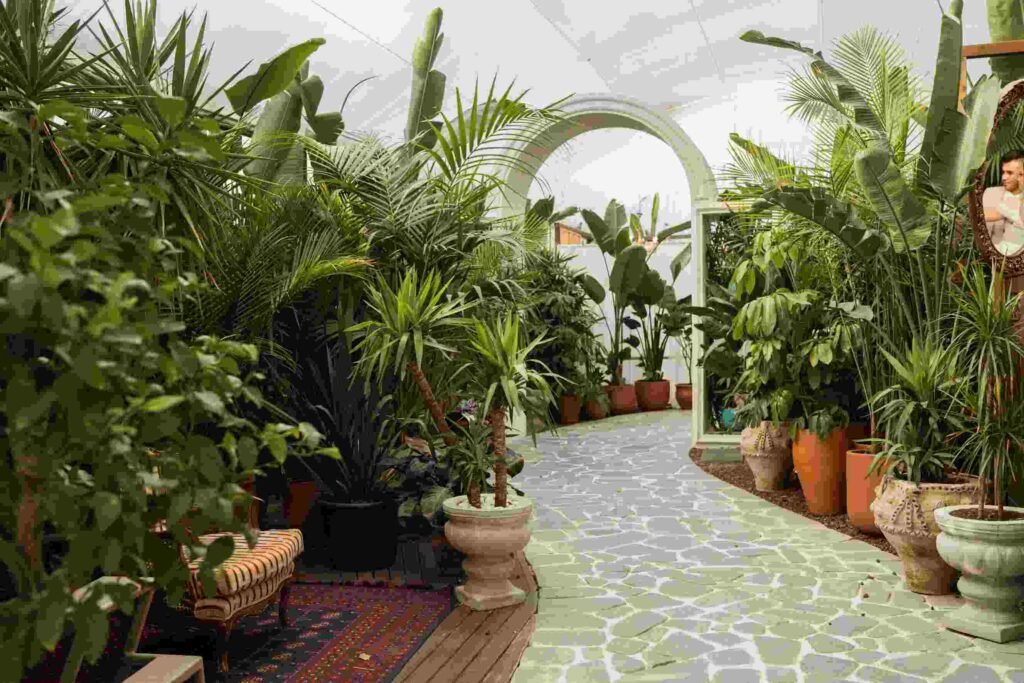
The foundation of a luxury indoor oasis is the plant itself. Instead of accumulating dozens of small pots, sophisticated interiors increasingly rely on a limited number of large, visually commanding specimens. This creates the same principle used in high-end interior styling: fewer elements, greater impact.
Fiddle Leaf Figs are particularly effective in rooms with generous vertical space. Their broad leaves create a strong graphic silhouette against neutral walls, while their relatively narrow trunk allows the plant to occupy vertical rather than excessive horizontal space. Monstera Deliciosa offers a different personality, with dramatic split leaves that introduce organic geometry into rooms dominated by stone, glass, metal, or straight architectural lines.
Other architectural houseplants can provide alternative compositions. Bird of Paradise plants create an almost sculptural tropical silhouette, while large palms can introduce softer movement. Snake plants are useful where vertical form is desired but floor space is limited. Mature specimens generally create a more immediate visual statement than numerous juvenile plants.
Spacing should be treated as seriously as furniture placement. Allow sufficient clearance around foliage so leaves are not constantly brushing walls, curtains, or high-traffic pathways. Large plants should not obstruct door openings or major circulation routes, and their containers should remain proportionate to the surrounding furniture.
Light remains the decisive horticultural factor. A visually perfect specimen will deteriorate if placed in an environment that cannot support its requirements. Before purchasing premium greenery, assess the direction and intensity of available natural light and select species accordingly.
The objective is not to create a jungle. It is to create botanical architecture.
Implementing Custom LED Lighting Systems
Natural light is rarely distributed perfectly throughout a luxury residence. A dramatic plant may occupy the ideal visual position in a room while receiving insufficient illumination for healthy growth. This is where architectural grow lighting becomes an essential part of smart indoor gardening.
Modern LED systems can provide horticulturally useful light while being integrated discreetly into ceilings, shelving, cabinetry, or architectural features. The most sophisticated installations avoid the appearance of improvised grow equipment. Instead, lighting becomes part of the interior design language.
Positioning is critical. Light should reach the foliage without producing excessive heat or creating harsh shadows across the room. Directional fixtures can highlight a specimen from above, while concealed linear lighting can support plants integrated into shelving or vertical installations.
Color spectrum also matters. Plants use different wavelengths for photosynthesis, and modern horticultural LEDs can be engineered to deliver useful spectral output. However, residential installations should balance plant requirements with human comfort. Extremely specialized grow-light colors may be effective horticulturally but visually unpleasant in a living environment.
Timers and smart controls can automate daily lighting cycles. More advanced systems can integrate illumination with environmental sensors, allowing the plant ecosystem to become part of the home’s broader automation infrastructure.
Durability is another consideration. Premium fixtures should be rated appropriately for their installation environment, especially where irrigation and humidity are present. Electrical components should be professionally installed and protected from water exposure.
The ideal lighting system is almost invisible. Visitors should notice the extraordinary health and form of the plants rather than wondering where the technology is located.
Coordinating Premium Ceramic and Marble Planters
In luxury interiors, the container is not merely a vessel. It is part of the architectural composition. A magnificent plant placed in an undersized or poorly finished pot can undermine an otherwise exceptional room.
Premium ceramic, natural stone, marble, terracotta, and architectural composite planters offer a broad range of visual possibilities. Polished marble can reinforce a formal interior, while matte ceramic provides a softer contemporary effect. Textured terracotta works beautifully in spaces emphasizing natural materials, whereas architectural concrete can complement minimalist interiors.
Scale should be carefully considered. A planter needs enough visual mass to support the height and foliage of its plant. A large Monstera placed inside a tiny container will appear top-heavy, while an enormous planter surrounding a modest plant can make the specimen feel visually insignificant.
Drainage is non-negotiable. Decorative containers should ideally accommodate an appropriate internal nursery pot or drainage system rather than forcing water to remain trapped around the roots. This becomes particularly important with premium materials, because persistent moisture can stain porous stone, damage flooring, or create unpleasant odors.
Floor protection should also be considered. Felt or specialized protective pads can prevent scratching beneath heavy investment-worthy planters, while waterproof liners can protect sensitive flooring. Marble and other natural stones should be maintained according to their specific material requirements because acidic cleaning products can damage certain finishes.
The most elegant interiors often repeat planter materials subtly. A marble planter might echo a kitchen island, while ceramic vessels could reference bathroom finishes or decorative objects. This creates continuity without making the greenery appear overly coordinated.
Managing Micro-Climate and Automated Humidity Layers
A truly sophisticated plant environment treats temperature, humidity, irrigation, and airflow as interconnected variables. Different plants have different environmental preferences, and the climate inside a modern American home can fluctuate significantly because of heating, air-conditioning, fireplaces, radiant floors, and large glass surfaces.
Humidity is especially important for tropical species. Indoor heating can create exceptionally dry winter conditions, while air-conditioning can alter both temperature and humidity during summer. A smart humidifier paired with a hygrometer can provide a more consistent environment, while automated systems can respond when humidity falls below a predetermined range.
Grouping plants with broadly compatible environmental requirements can create a practical micro-climate. Plants positioned together may experience a slightly more humid local environment through natural transpiration, although this should not be treated as a replacement for proper environmental control.
Airflow matters as well. Plants should not sit directly beside powerful heating vents or air-conditioning outlets. At the same time, completely stagnant air can encourage fungal and pest problems. Gentle circulation is generally preferable to strong continuous drafts.
Automated irrigation can further elevate smart indoor gardening, particularly for homeowners who travel frequently. Moisture sensors and controlled watering systems can reduce the risk of both drought and overwatering. However, automation should supplement observation rather than replace it. Sensors can fail, and different substrates behave differently.
For luxury residences, discreet infrastructure is the goal. Irrigation reservoirs, sensors, humidifiers, and controllers should be integrated into cabinetry or designated plant zones wherever practical.
Vertical Green Wall Infrastructure
The ultimate expression of premium greenery is often vertical. A green wall can transform a blank architectural surface into a living installation, creating a visual centerpiece without consuming substantial floor area.
There are several approaches, ranging from modular planter systems to hydroponic and professionally maintained living-wall installations. The appropriate system depends on the architecture, available light, desired plant palette, maintenance expectations, and water-management infrastructure.
A successful green wall begins with structural planning. The wall must be capable of supporting the weight of the system, plants, substrate, and water. Waterproofing is equally important because irrigation failure can create serious damage to walls and flooring.
Plant selection should reflect the environmental conditions rather than simply visual preference. Ferns, pothos, philodendrons, peperomias, and certain tropical species can work effectively in appropriate indoor systems, while plants requiring dramatically different conditions can complicate maintenance.
Visual rhythm is critical. A green wall should not resemble a random collection of pots. Repetition, tonal variation, leaf scale, and negative space can be used to create an intentional composition. Designers may also combine living plants with stone, wood, metal, or architectural lighting to make the installation feel like a permanent interior feature.
Maintenance access must be designed from the beginning. Even the most sophisticated installation requires pruning, replacement, inspection, irrigation management, and pest monitoring. A luxury living wall should therefore be treated almost like a mechanical system: beautiful on the surface, carefully engineered underneath.
Greenery as a New Dimension of Luxury
The modern indoor plant oasis represents a fundamental change in the relationship between architecture and nature. Premium greenery is no longer simply an accessory positioned in an empty corner. At its most sophisticated, it becomes part of the property’s spatial identity.
Large architectural plants create scale and softness. Custom LEDs provide controlled growing conditions. Designer plant pots turn horticultural necessities into sculptural objects. Automated humidity and irrigation systems introduce invisible technical sophistication, while vertical green walls transform architecture itself into a living surface.
The strongest results come from restraint and curation. Rather than filling every available surface with foliage, homeowners can identify key sightlines and architectural moments where greenery produces maximum impact. A single mature specimen beside a staircase may accomplish more than twenty small plants scattered throughout a room.
There is also a compelling lifestyle dimension. Natural materials and vegetation can make interiors feel softer and more visually restorative, while caring for living plants introduces an element of seasonality and change into highly controlled modern homes. Claims surrounding mental wellness should remain evidence-based, but the psychological appeal of bringing nature indoors is clearly influencing contemporary residential design.
From an economic perspective, carefully executed high-end indoor plant design can also enhance the perceived sophistication of a property, particularly when it is integrated with architecture rather than treated as temporary decoration. Yet the real value is experiential.
The future of luxury interiors will increasingly belong to homes that feel alive. The finest spaces will not merely display expensive furniture and finishes; they will create ecosystems in which architecture, technology, horticulture, and human experience reinforce one another.
In that environment, premium greenery becomes more than decoration. It becomes a form of living architecture—and one of the most compelling elite biophilic lifestyle essentials for the contemporary luxury home.